### The Transformative Ministry of Jesus Christ: Faith, Compassion, and Disability Inclusion
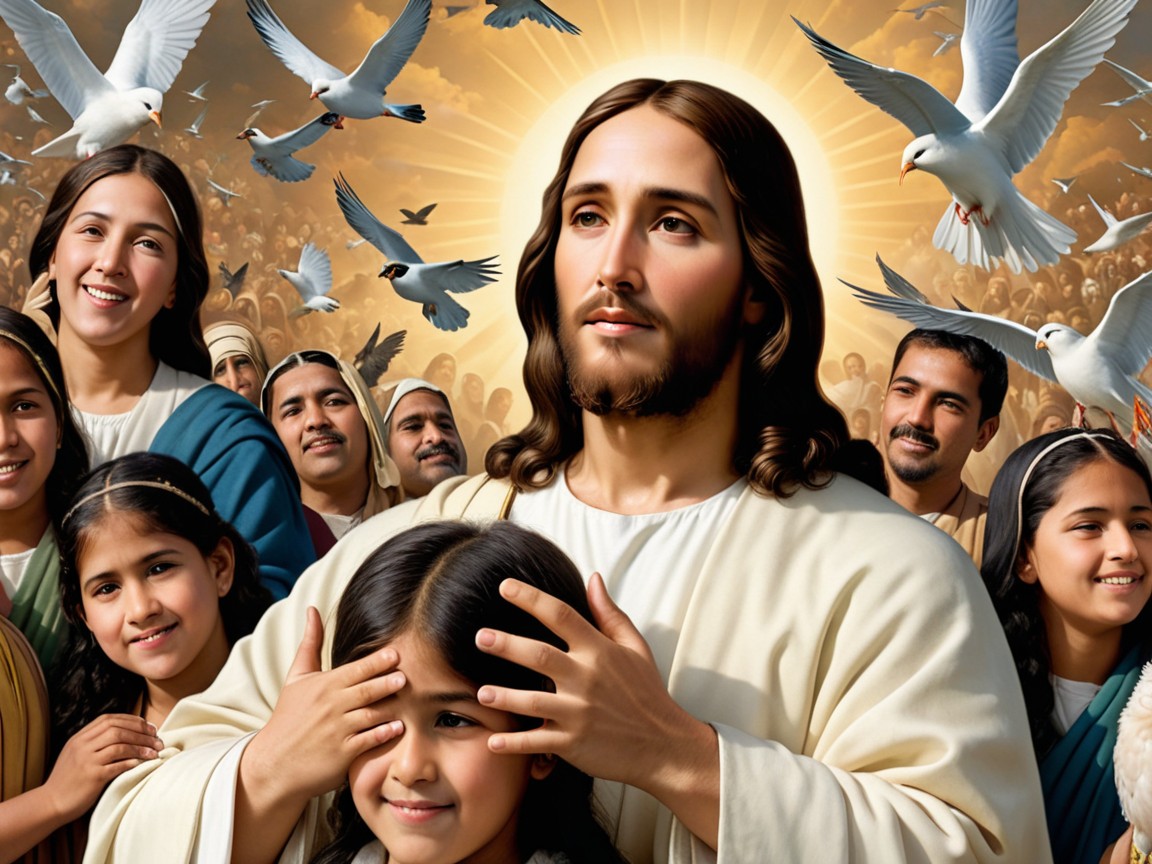
The life of Jesus Christ is a transformative narrative that extends far beyond history and theology, highlighting his radical compassion for marginalized groups, particularly persons with disabilities (PWDs).
This article explores the biblical accounts of Jesus’ interactions with individuals facing disabilities, tracing these narratives from the foundational texts of the Old Testament to the fulfillment of the New Testament. We showcase how Jesus performed profound miracles that systematically uplifted these individuals. Additionally, we will compare his inclusive approach with the historical teachings of other major religious leaders, analyze modern applications of his principles, and discuss the deep symbolic significance of global Christmas celebrations.
***The Historical Context of Disability in Scripture***
The Bible introduces the concept of structural lineage and blessing early in Genesis—such as when Jacob blesses his son Judah—signaling the beginning of sweeping covenant narratives. However, throughout ancient history and scripture, disabilities often symbolized not only intense physical challenges but also heavy societal stigma and exclusion.
In many ancient cultures, a physical limitation was incorrectly viewed as a spiritual curse or a social disqualifier, leaving individuals completely dependent on isolation or street-side begging.
***The Radical Healing Ministry of Jesus***
When Jesus began his earthly ministry, he systematically dismantled these cultural prejudices. Rather than ignoring or pitying individuals with physical differences, he engaged them directly, offering restoration, dignity, and a place at the center of community life.
Key examples of disability inclusion and healing in the New Testament include:
* **Blindness (John 9:1-12):** Jesus heals a man blind from birth, explicitly teaching his disciples that the man's condition was not a result of sin, proving that physical limitations do not define human worth.
* **Lameness (Acts 3:1-10):** Following the path laid by Christ, Peter and John heal a lame beggar at the Temple Gate Beautiful, continuing Jesus’ powerful legacy of restoring mobility and access.
* **Deafness (Mark 7:31-37):** Jesus restores a deaf man’s hearing and speech, emphasizing his divine desire for clear, inclusive communication and social connection.
* **Mental and Spiritual Afflictions (Mark 5:1-20):** The healing of the Gerasene demoniac illustrates Christ's supreme authority over both physical and spiritual isolation, returning a marginalized man to his right mind and his family.
* **Chronic Illness (Mark 5:25-34):** The account of the woman suffering from a chronic hemorrhage serves as a beautiful example of Jesus’ concern for female health, legal purity, and personal dignity in public spaces.
***Miracles as a Testament of True Friendship and Advocacy***
Through his public ministry, Jesus performed miracles that did not merely alter physical cells; they altered social destinies. By healing the outcasts, he forced society to reintegrate them, demonstrating a model of active friendship and fierce human rights advocacy.
**The First and Last Miracles of Transformation:**
* **The First Recorded Miracle:** While the turning of water into wine at the wedding in Cana (**John 2:1-11**) was not directly related to disability, it established his foundational ministry theme: turning lack into absolute abundance and transforming the ordinary into the extraordinary.
* **The Last Recorded Miracle:** In the final, chaotic hours before his crucifixion, Jesus heals the severed ear of Malchus (**Luke 22:50-51**) during his arrest in the garden. This final act showcases his deep-seated compassion, which remained steadfast even in moments of intense personal turmoil.
***Comparative Analysis: Compassion Towards Disabilities Across Faith Traditions***
To fully understand the unique, hands-on nature of Jesus’ teachings, it is highly insightful to examine his approach alongside the core historical records and teachings of five other deeply influential religious figures: Moses, Buddha, Muhammad, Confucius, and Guru Nanak.
**Understanding the Role of Moses**
In this comparative context, Moses serves as the monumental lawgiver significant to Judaism, Christianity, and Islam. Known for leading the Israelites out of Egyptian bondage, receiving the Ten Commandments, and witnessing miracles like the parting of the Red Sea (**Exodus 14**), his legacy focuses heavily on community justice, structural law, and covenant protection. In **Exodus 4:10-12**, when Moses hesitates due to his own speech impediment, God explicitly states that He equips and empowers the disabled, aligning with the core message of inclusion.
| Religious Leader | Background & Framework | Teachings on Disabilities | Documented Miracles / Major Acts | Key Scriptural References |
|---|---|---|---|---|
| **Jesus Christ** | Christianity | Advocated immediate, active inclusion and total physical/social healing. | Extensive personal healings of blind, deaf, lame, and paralyzed individuals. | John 9:1-12; Luke 14:13-14 |
| **Moses** | Judaism | Emphasized structural community support, legal protections, and collective justice. | Performed national signs in Exodus; brought forth water; split the Red Sea. | Exodus 4:10-12; Leviticus 19:14 |
| **Buddha** | Buddhism | Focused on universal compassion (*karuna*) to eliminate worldly suffering. | Taming of the wild elephant; miraculous acts demonstrating mental control over nature. | *“Compassion is the basis of morality.”* |
| **Muhammad** | Islam | Emphasized equal spiritual dignity and fair treatment for all members of society. | Miraculous spiritual events, including the splitting of the moon under pressure. | Qur’an 17:70 *(Dignity for all humanity)* |
| **Confucius** | Confucianism | Valued rigid family structures, societal harmony, and ethical moral obligations. | Focused on wise political counsel, ethics, and philosophy rather than miracles. | *“Respect for the poor, the elderly, and the disabled.”* |
| **Guru Nanak** | Sikhism | Promoted radical equality, community service (*seva*), and care for the vulnerable. | Countless acts of localized kindness, charity, and breaking of oppressive caste lines. | *“There is no Hindu, there is no Muslim.”* |
***Core Analysis of the Findings***
1. **Direct Inclusivity Focus:** Jesus uniquely emphasizes the immediate, touchable value of individuals with disabilities, consistently breaking strict ancient social norms and clean/unclean laws to bring them into full fellowship.
2. **The Purpose of Miraculous Proofs:** While other leaders utilized miracles or deep philosophy to establish national laws, divine authority, or cosmic truths, Jesus’ physical signs almost always doubled as immediate acts of localized, personal restoration.
3. **Active Community Engagement:** Most global leaders advocate for overarching social equality from a philosophical standpoint. However, Jesus' gospels show him actively stopping on roadsides, touching the blind, and involving individuals directly in his daily mission, fostering deep personal connections.
***Modern-Day Reflections: Lessons for Today’s Leaders***
Examining the global faith landscape reveals how modern spiritual leaders are working to align with the benchmark set by Christ. Prominent global figures continuously advocate for social justice, pushing for physical and digital inclusion within faith communities.
* **Rick Warren:** Internationally known for promoting specialized, inclusive church initiatives that support families and individuals navigating severe physical and developmental disabilities.
* **Tony Campolo:** A vocal advocate for marginalized groups, constantly challenging modern faith communities to build fully accessible, barrier-free spaces that reflect Christ's original vision.
**Takeaways for Contemporary Society:**
* **Advocacy Over Sympathy:** Jesus’ example challenges modern leaders to move past empty pity and instead advocate for real, structural changes in accessibility and employment law.
* **Personal Connection:** Building direct, respectful relationships with individuals facing disabilities is the true key to mutual empowerment.
* **Visible Acts of Kindness:** Intentional acts of inclusion enhance the public visibility and unconditional acceptance of PWDs worldwide.
***The Significance of Christmas: History, Culture, and Symbolism***
December 25th—the traditional global date of Christmas—is an extraordinary example of cultural adaptation. While the exact calendar date of Jesus Christ’s birth is historically unknown, and December 25th is never explicitly mentioned in biblical manuscripts, the date holds immense symbolic power.
The early Christian church initially chose to focus its celebrations on Christ's resurrection (Easter) rather than his birth. However, by the 4th century, Pope Julius I formalized December 25th as the celebration of the Nativity. This strategic decision beautifully aligned with existing winter festivals in the Roman Empire:
* **Saturnalia (Dec 17–23):** A popular Roman festival honoring Saturn, characterized by feasting, community equality, and the joyful giving of gifts.
* **Dies Natalis Solis Invicti (Dec 25):** The celebration of the “Birth of the Unconquered Sun,” marking the turning point of the winter solstice where light begins to conquer darkness.
By placing Christmas on this date, the early church made it culturally natural for communities to adopt the faith, transforming a celebration of the physical sun into a celebration of the spiritual "Light of the World."
Historical and scriptural clues—such as the accounts in **Luke 2:8-12** noting shepherds watching over their flocks in the open fields overnight—suggest that Jesus was likely born during the milder spring or early autumn seasons. Regardless of the exact timeline, Christmas remains a beautiful, global monument to the message of hope, peace, and goodwill to all humanity.
***Conclusion***
The life and teachings of Jesus Christ radically transformed how the world views disability, establishing an eternal model of absolute inclusivity, love, and human dignity. His miracles are not mere historical events; they are powerful, living blueprints for contemporary leaders, governments, and local communities to actively uplift persons with disabilities.
As we celebrate global events like Christmas, recognizing the historical and spiritual context of his mission lends a far deeper meaning to our advocacy. By emulating his radical compassion and demanding real social change, we can build a truly accessible and transformative world for everyone.
***Support Our PWD Advocacy Page***
Dear Supporters,
We are immensely grateful for your incredible generosity and the beautiful spirit of giving that you have consistently shown towards the **Izidor and Friends Project**. Your donations, tips, and encouragement are not just financial contributions; they are powerful acts of kindness that directly fuel our daily mission to empower, equip, and uplift the lives of persons with disabilities.
Your support stands as a beautiful testament to the collective power of community, faith, and compassion in driving positive global change. Please accept our most heartfelt thanks for your invaluable contributions. Together, we are making a real difference, one deliberate step at a time.
With warm appreciation,
**Izidor Jacob & Team**
**Show love, share kindness!** Support our PWD page and help us create a more inclusive world. Donate any amount to support our PWD advocacy and outreach page.
* **PayPal:** ikeagwuizidor@gmail.com
* **Zenith Bank Plc Nigeria:** Account Number 1003235561
***Useful Resources for Advocates and Champions***
You may find these curated resources highly useful. When you make a purchase or register through these verified links, we earn a small professional commission, and you become an official disabilities advocate champion! 😁
* LearnWorlds Creative Learning Platform
* Additional Advocacy Tools & Links
* Get Certified AI Affiliate Portal
* Buy *Business Words Used Offline* by Izidor Jacob on Selar
* Buy *Affiliate Marketing Secrets* by Izidor Jacob on Selar
* Stakecut Affiliate Resource Link 1
* Stakecut Affiliate Resource Link 2
* Izidor Jacob Official Selar Creator Profile
The life of Jesus Christ is a transformative narrative that extends far beyond history and theology, highlighting his radical compassion for marginalized groups, particularly persons with disabilities (PWDs).
This article explores the biblical accounts of Jesus’ interactions with individuals facing disabilities, tracing these narratives from the foundational texts of the Old Testament to the fulfillment of the New Testament. We showcase how Jesus performed profound miracles that systematically uplifted these individuals. Additionally, we will compare his inclusive approach with the historical teachings of other major religious leaders, analyze modern applications of his principles, and discuss the deep symbolic significance of global Christmas celebrations.
***The Historical Context of Disability in Scripture***
The Bible introduces the concept of structural lineage and blessing early in Genesis—such as when Jacob blesses his son Judah—signaling the beginning of sweeping covenant narratives. However, throughout ancient history and scripture, disabilities often symbolized not only intense physical challenges but also heavy societal stigma and exclusion.
In many ancient cultures, a physical limitation was incorrectly viewed as a spiritual curse or a social disqualifier, leaving individuals completely dependent on isolation or street-side begging.
***The Radical Healing Ministry of Jesus***
When Jesus began his earthly ministry, he systematically dismantled these cultural prejudices. Rather than ignoring or pitying individuals with physical differences, he engaged them directly, offering restoration, dignity, and a place at the center of community life.
Key examples of disability inclusion and healing in the New Testament include:
* **Blindness (John 9:1-12):** Jesus heals a man blind from birth, explicitly teaching his disciples that the man's condition was not a result of sin, proving that physical limitations do not define human worth.
* **Lameness (Acts 3:1-10):** Following the path laid by Christ, Peter and John heal a lame beggar at the Temple Gate Beautiful, continuing Jesus’ powerful legacy of restoring mobility and access.
* **Deafness (Mark 7:31-37):** Jesus restores a deaf man’s hearing and speech, emphasizing his divine desire for clear, inclusive communication and social connection.
* **Mental and Spiritual Afflictions (Mark 5:1-20):** The healing of the Gerasene demoniac illustrates Christ's supreme authority over both physical and spiritual isolation, returning a marginalized man to his right mind and his family.
* **Chronic Illness (Mark 5:25-34):** The account of the woman suffering from a chronic hemorrhage serves as a beautiful example of Jesus’ concern for female health, legal purity, and personal dignity in public spaces.
***Miracles as a Testament of True Friendship and Advocacy***
Through his public ministry, Jesus performed miracles that did not merely alter physical cells; they altered social destinies. By healing the outcasts, he forced society to reintegrate them, demonstrating a model of active friendship and fierce human rights advocacy.
**The First and Last Miracles of Transformation:**
* **The First Recorded Miracle:** While the turning of water into wine at the wedding in Cana (**John 2:1-11**) was not directly related to disability, it established his foundational ministry theme: turning lack into absolute abundance and transforming the ordinary into the extraordinary.
* **The Last Recorded Miracle:** In the final, chaotic hours before his crucifixion, Jesus heals the severed ear of Malchus (**Luke 22:50-51**) during his arrest in the garden. This final act showcases his deep-seated compassion, which remained steadfast even in moments of intense personal turmoil.
***Comparative Analysis: Compassion Towards Disabilities Across Faith Traditions***
To fully understand the unique, hands-on nature of Jesus’ teachings, it is highly insightful to examine his approach alongside the core historical records and teachings of five other deeply influential religious figures: Moses, Buddha, Muhammad, Confucius, and Guru Nanak.
**Understanding the Role of Moses**
In this comparative context, Moses serves as the monumental lawgiver significant to Judaism, Christianity, and Islam. Known for leading the Israelites out of Egyptian bondage, receiving the Ten Commandments, and witnessing miracles like the parting of the Red Sea (**Exodus 14**), his legacy focuses heavily on community justice, structural law, and covenant protection. In **Exodus 4:10-12**, when Moses hesitates due to his own speech impediment, God explicitly states that He equips and empowers the disabled, aligning with the core message of inclusion.
| Religious Leader | Background & Framework | Teachings on Disabilities | Documented Miracles / Major Acts | Key Scriptural References |
|---|---|---|---|---|
| **Jesus Christ** | Christianity | Advocated immediate, active inclusion and total physical/social healing. | Extensive personal healings of blind, deaf, lame, and paralyzed individuals. | John 9:1-12; Luke 14:13-14 |
| **Moses** | Judaism | Emphasized structural community support, legal protections, and collective justice. | Performed national signs in Exodus; brought forth water; split the Red Sea. | Exodus 4:10-12; Leviticus 19:14 |
| **Buddha** | Buddhism | Focused on universal compassion (*karuna*) to eliminate worldly suffering. | Taming of the wild elephant; miraculous acts demonstrating mental control over nature. | *“Compassion is the basis of morality.”* |
| **Muhammad** | Islam | Emphasized equal spiritual dignity and fair treatment for all members of society. | Miraculous spiritual events, including the splitting of the moon under pressure. | Qur’an 17:70 *(Dignity for all humanity)* |
| **Confucius** | Confucianism | Valued rigid family structures, societal harmony, and ethical moral obligations. | Focused on wise political counsel, ethics, and philosophy rather than miracles. | *“Respect for the poor, the elderly, and the disabled.”* |
| **Guru Nanak** | Sikhism | Promoted radical equality, community service (*seva*), and care for the vulnerable. | Countless acts of localized kindness, charity, and breaking of oppressive caste lines. | *“There is no Hindu, there is no Muslim.”* |
***Core Analysis of the Findings***
1. **Direct Inclusivity Focus:** Jesus uniquely emphasizes the immediate, touchable value of individuals with disabilities, consistently breaking strict ancient social norms and clean/unclean laws to bring them into full fellowship.
2. **The Purpose of Miraculous Proofs:** While other leaders utilized miracles or deep philosophy to establish national laws, divine authority, or cosmic truths, Jesus’ physical signs almost always doubled as immediate acts of localized, personal restoration.
3. **Active Community Engagement:** Most global leaders advocate for overarching social equality from a philosophical standpoint. However, Jesus' gospels show him actively stopping on roadsides, touching the blind, and involving individuals directly in his daily mission, fostering deep personal connections.
***Modern-Day Reflections: Lessons for Today’s Leaders***
Examining the global faith landscape reveals how modern spiritual leaders are working to align with the benchmark set by Christ. Prominent global figures continuously advocate for social justice, pushing for physical and digital inclusion within faith communities.
* **Rick Warren:** Internationally known for promoting specialized, inclusive church initiatives that support families and individuals navigating severe physical and developmental disabilities.
* **Tony Campolo:** A vocal advocate for marginalized groups, constantly challenging modern faith communities to build fully accessible, barrier-free spaces that reflect Christ's original vision.
**Takeaways for Contemporary Society:**
* **Advocacy Over Sympathy:** Jesus’ example challenges modern leaders to move past empty pity and instead advocate for real, structural changes in accessibility and employment law.
* **Personal Connection:** Building direct, respectful relationships with individuals facing disabilities is the true key to mutual empowerment.
* **Visible Acts of Kindness:** Intentional acts of inclusion enhance the public visibility and unconditional acceptance of PWDs worldwide.
***The Significance of Christmas: History, Culture, and Symbolism***
December 25th—the traditional global date of Christmas—is an extraordinary example of cultural adaptation. While the exact calendar date of Jesus Christ’s birth is historically unknown, and December 25th is never explicitly mentioned in biblical manuscripts, the date holds immense symbolic power.
The early Christian church initially chose to focus its celebrations on Christ's resurrection (Easter) rather than his birth. However, by the 4th century, Pope Julius I formalized December 25th as the celebration of the Nativity. This strategic decision beautifully aligned with existing winter festivals in the Roman Empire:
* **Saturnalia (Dec 17–23):** A popular Roman festival honoring Saturn, characterized by feasting, community equality, and the joyful giving of gifts.
* **Dies Natalis Solis Invicti (Dec 25):** The celebration of the “Birth of the Unconquered Sun,” marking the turning point of the winter solstice where light begins to conquer darkness.
By placing Christmas on this date, the early church made it culturally natural for communities to adopt the faith, transforming a celebration of the physical sun into a celebration of the spiritual "Light of the World."
Historical and scriptural clues—such as the accounts in **Luke 2:8-12** noting shepherds watching over their flocks in the open fields overnight—suggest that Jesus was likely born during the milder spring or early autumn seasons. Regardless of the exact timeline, Christmas remains a beautiful, global monument to the message of hope, peace, and goodwill to all humanity.
***Conclusion***
The life and teachings of Jesus Christ radically transformed how the world views disability, establishing an eternal model of absolute inclusivity, love, and human dignity. His miracles are not mere historical events; they are powerful, living blueprints for contemporary leaders, governments, and local communities to actively uplift persons with disabilities.
As we celebrate global events like Christmas, recognizing the historical and spiritual context of his mission lends a far deeper meaning to our advocacy. By emulating his radical compassion and demanding real social change, we can build a truly accessible and transformative world for everyone.
***Support Our PWD Advocacy Page***
Dear Supporters,
We are immensely grateful for your incredible generosity and the beautiful spirit of giving that you have consistently shown towards the **Izidor and Friends Project**. Your donations, tips, and encouragement are not just financial contributions; they are powerful acts of kindness that directly fuel our daily mission to empower, equip, and uplift the lives of persons with disabilities.
Your support stands as a beautiful testament to the collective power of community, faith, and compassion in driving positive global change. Please accept our most heartfelt thanks for your invaluable contributions. Together, we are making a real difference, one deliberate step at a time.
With warm appreciation,
**Izidor Jacob & Team**
**Show love, share kindness!** Support our PWD page and help us create a more inclusive world. Donate any amount to support our PWD advocacy and outreach page.
* **PayPal:** ikeagwuizidor@gmail.com
* **Zenith Bank Plc Nigeria:** Account Number 1003235561
***Useful Resources for Advocates and Champions***
You may find these curated resources highly useful. When you make a purchase or register through these verified links, we earn a small professional commission, and you become an official disabilities advocate champion! 😁
* LearnWorlds Creative Learning Platform
* Additional Advocacy Tools & Links
* Get Certified AI Affiliate Portal
* Buy *Business Words Used Offline* by Izidor Jacob on Selar
* Buy *Affiliate Marketing Secrets* by Izidor Jacob on Selar
* Stakecut Affiliate Resource Link 1
* Stakecut Affiliate Resource Link 2
* Izidor Jacob Official Selar Creator Profile